I also developed ankle eversion in my left foot. Walking became painful and it limited my activity. I couldn’t stand for any length of time before my feet and ankles would seize up and I would have a hard time walking it out.
I get injections in my calves and the bottom of my feet, ouch! These are also some of the most painful injections. The needle is hooked up to the machine that makes white noise. The toe curling and ankle eversion is triggered while the needle is twisted and maneuvered in the muscles until the white noise is heard, which indicates the precise location where to inject. There’s not much padding on the bottom of a foot but it surprises me how far the needle is inserted. Sometimes the muscle area is located right away. I dread the times when it takes a series of poking and prodding. The sweet spot tends to be elusive in my calves. I think it’s due to the massive area it has to sort its way through. It always hurts when there’s a needle tube swap. The tube is unscrewed while the needle stays in the muscles and a new tube of Botox is screwed on. This happens every time due to the amount I need. I now receive 600 units of Botox every 12 weeks from head to toe.
It’s quite painful to walk or use my feet for driving following
my injections and prefer to have someone drive me home. I hate to make Kurt or
Cloe break away from their day but I’m very grateful for the help. It sounds
like a simple thing to ask but it takes a good chunk of time out of their day. They
try to schedule me for the last appointment of the day because my injections
take so long. It’s not unusual to start my exam around 5:00 and not leave until
6:30 or 7:00.
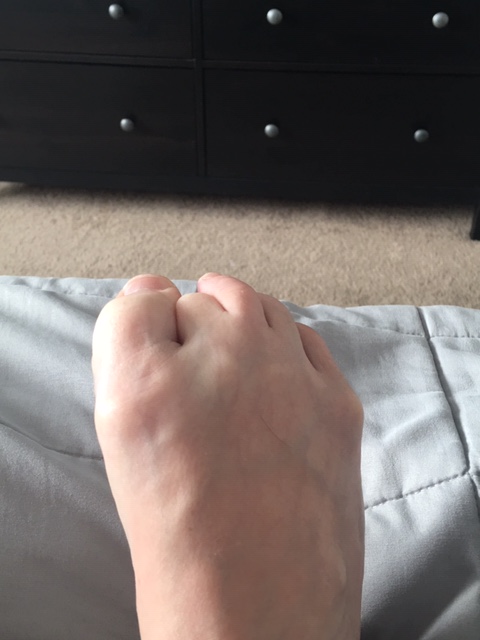
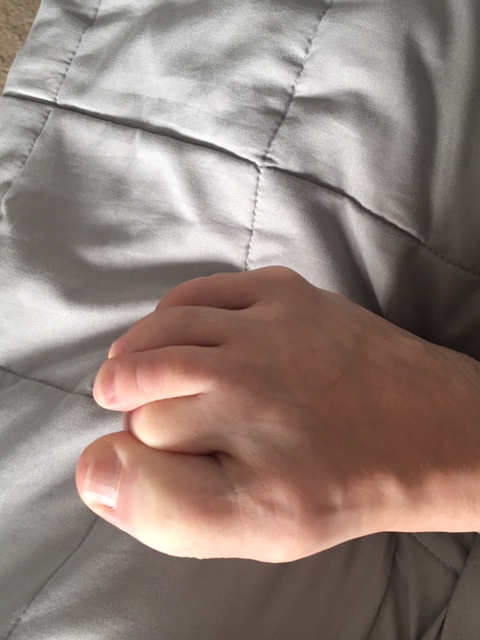
One day lying in bed, one of my toes curled under my foot and I had to physically pull it up. Hmm, that was new. I brought it up at my next doctor appointment and sure enough I now had lower limb dystonia. At first the toe curling was only my left foot. The weight of a blanket is enough to cause my toes to curl. At times when I can’t pry them straight, I use the floor and put weight on them in order to straighten them out. Eventually it made its way to my right foot too.
Then I started having problems walking. At first it was just my right foot pointing out, like Charlie Chaplin except it’s only one foot. I don’t recall how much time went by before my right foot started dragging. I thought it was my ankle or knee causing my foot to be weird. It was actually my hip. Then my gait slowed down,
I was experiencing new symptoms at an alarming rate. Before we could figure out a game plan, a new issue would surface. I was having a hard time processing the fact that I could no longer control my own body. It felt like the dystonia had not only taken over me physically, it was taking away my freedom.
It was time for another come to Jesus moment and learn how to adjust to my new normal. There are millions of people who struggle with hardships greater than mine. I have an amazing family support system!! I was about to learn that I have an extended family at work too…
Dr Kumar had been asking me if I was Jewish over a year or so, to which I always replied, “not that I know of”. He finally decided the time was right to see if I had a mutated gene. There are various classifications based on age of onset, body distribution, temporal pattern and associated features. He was looking for the DYT1 and DYT6 genes. DBS brain surgery has a high success rate for treatment of these genes.
I called the lady who ran the dystonia study to ask why Dr Kumar kept thinking I had Jewish ancestry and how it related to genetic testing. She explained the Ashkenazi Jews tend to have DYT1 gene that causes dystonia and so do Mennonites. BINGO! Dr Kumar never asked if I was of Mennonite descent. My maternal grandfather left the Mennonite church in his early twenties.
This part of my family left Germany, made their way through Canada and down to Colorado on the eastern plains. This was a tight knit community for generations, in fact my grandpa’s first language wasn’t even English, it was German.
Why did I just tell you my detailed family tree? Because Amish and Mennonites that migrated from Germany through Canada are particularly prone to genetic mutations causing dystonia. When it’s against a religion to marry outside the faith and the community is small to begin with, well you get the picture. That’s right, I’m the product of inbreeding. YUCK! My mother passed away from HER2 breast cancer, which is a genetic mutation…makes me wonder.
They ran a whole panel of genes and if my results came back with DYT1 and/or DYT6, my daughter would be tested next. These genes mean she has a probable chance that her kids could develop childhood onset of dystonia. She would have to weigh the options before having more children. Thank goodness my results came back negative for them. They are discovering new mutated genes related to Mennonite descendants on an alarming rate. Dr Kumar believes I have a mutated gene that wasn’t in the panel run on me.
The next question was “do I have any family members
diagnosed with dystonia?” I don’t really know my grandpa’s family for an answer
to the question. In all certainty, I know he had blepharospasms and cervical
dystonia. My grandpa had excessive eye blinking and movement of his eyebrows.
He also shifted his body instead of turning his neck. This was noticeable when
he would listen to the person he was having a conversation with. I never
thought anything about it since I didn’t know him any other way. I had never
even heard about dystonia while he was alive.
I have chronic cotton mouth as a side effect from meds. If I don’t drink water, chew gum or have a mint for even five minutes, my mouth gets so dry that my teeth stick to my cheeks. I was prone to mouth sores since my mouth was so dry, not to mention the halitosis. I even carry a travel biotene in my purse. Nights are the worst part of the day regarding cotton mouth. All I can think about is drinking water, which keeps me up. I currently take 5mg of pilocarpine 4 times a day. It helps produce saliva.
I’ve discovered some helpful hacks. Oil pulling with coconut once a week has cured the pesky mouth sores, not to mention my teeth feel super clean. I use sugar free mints at bedtime. I occasionally wake up during the night from dry mouth, so I pop a mint and typically go back to sleep.
I was struggling with horrible head pressure. I thought I was suffering from allergies causing severe sinus pressure. The pressure was so bad my front teeth hurt to bite down. I was taking allergy meds, Sudafed, using a neti pot and anything that promised to help relieve sinus pressure. At times I would throw up from the pain.
I was also having a hard time seeing the computer monitor or reading in general. I tried the generic readers from the drugstore, which helped a bit. Gradually my vision was fuzzy regardless if it was near sided or far sided. I had my eyes checked and thought a new prescription would do the trick. The new glasses did help with my vision but I couldn’t take the weight of the glasses on my nose. It would make me ill. I found weights that slipped onto the earpiece like a sock. The weights pull the glasses up, off my nose and it was an ok option.
I never thought the pressure could be dystonia driven. I was
prescribed pilocarpine eye drops. I take 2 drops, 2 or 3 times day. I no longer
needed eyeglasses, woot-woot! It causes the pupil of the eye to shrink, which
decreases the amount of fluid within the eye, reducing pressure. It’s normally
prescribed for people with glaucoma. I still suffered from cranial pressure but
this definitely put a dent in the pain. I still use the weights with my driving
glasses or sunglasses.
My right hand didn’t want to cooperate with everyday tasks. I couldn’t get my fingers close enough together to wash my face. My hand would seize up if I held my grip in the same spot of the steering wheel for too long. I had butterfingers. Without notice, I would drop whatever I was holding. To this day, I don’t have much strength in my right hand.
Work was becoming problematic. I couldn’t type for any length of time before the pain was too much and no matter how hard I tried, I couldn’t move my fingers. The remainder of the day I used only my left hand to peck at the keyboard. Since I deal with numbers all day, it was challenging entering numeric values. I struggled to grip a pen in order to write. When I could hold the pen, my penmanship was difficult to read.
This was a hard reality that truly scared me. I wasn’t sure what the future held for me.
It was time to think outside the box. I found a keyboard with the 10-key pad on the left side. My boss approved a lefthanded rollerball mouse…and the biggest game changer was the voice recognition software. The software even learned my commands when my vocal cords would break while speaking.
Things seemed to plateau for a while and I settled into my new normal. I learned how to hold things against me instead of relying on my hand to hold something. I got a cell phone ring holder so I wouldn’t drop my phone. With trial and error, I found an adaptive writing device. Everything else I’d learned how to do lefthanded.
I had already adapted to the limited mobility of my neck. My eyes were responding well to the treatment. Occasionally I struggled to open my eyes and I worried someone might think I was rolling my eyes at them.
Dystonia in hands can be task specific. Have you ever gotten writer’s cramp? That is a task specific focal dystonia. There’s also a musician’s cramp, which is task specific. It can be so severe that a musician can never play again. Sad day for them if that’s how they make a living. I have typing and writing, task specific dystonia, involuntary finger extension and wrist flexion.
A pain in my right arm was waking me up at night. My right hand would tingle like it was asleep when I washed my hair. I was struggling to type or 10-key. I lost the strength to open easy things like a water bottle. Dr Kumar sent me to be tested for carpel tunnel.
They hook up some wires and use a needle to see how fast signals are along the median nerve and the muscle response. The tests showed carpel tunnel and they signed me up for surgery. The surgery helped things like, my hand “falling asleep” when I washed my hair. It didn’t help with work, ugh.
Sure enough, the dystonia was now in my limbs. I officially had generalized dystonia. It is unusual for an adult onset of dystonia to show up in a nonadjacent body part. For example, someone with blepharospasms (eyes) might end up with cervical dystonia (neck) since they are adjacent. It is sadly typical for a youth onset to have generalized dystonia.
My right hand and wrist were now added to the list for injections. I received injections for digits 3-5, middle, ring and little finger. I find it interesting the injections are done about halfway up my forearm that affect my hand.
Dr Kumar uses a machine with an injection needle that’s hooked up to a machine with contact stickers on me. The needle probes and twists the muscle area until the machine picks up on the spasming location. I think it sounds like white noise old tv’s used to make when there was no signal. The EMG machine, electromyography, is used for all my injections except my eyes and vocal cords.
We now started oral medication to help treat the dystonia. I
won’t go into the titrations but here’s where we landed.
Trihexyphenidyl (Artane) – 2mgs 3/day
Austedo – bad reaction
Baclofen – 20mgs 3/day, in addition to the
20/mgs at bedtime for my occipital neuralgia making it 80mgs for the day
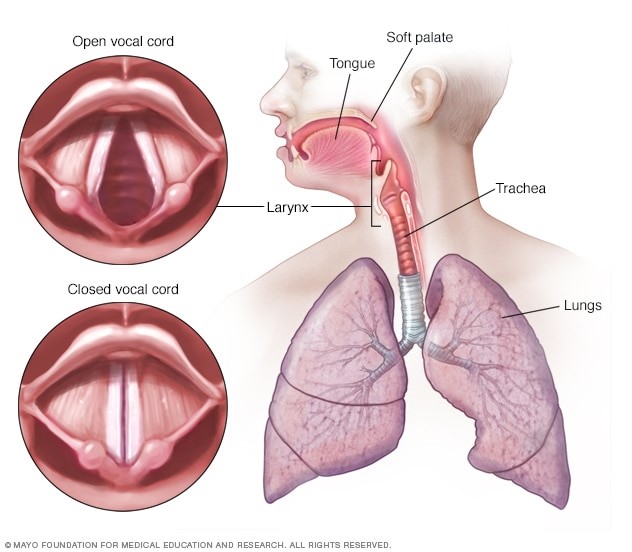
When I am talking my vocal cords give out and it sounds like I am sick. I would try clearing my throat but it never helped. As the frequency increased, it started to hurt when I talked too much…haha, I know some people might think it’s a good thing.
Here is an official explanation courtesy of Wikipedia: Spasmodic dysphonia, also known as laryngeal dystonia, is a disorder in which the muscles that generate a person’s voice go into periods of spasm. This results in breaks or interruptions in the voice, often every few sentences, which can make a person difficult to understand.
r Since Dr Kumar is a movement neurologist, I had to see an ENT specialist. Spasmodic dysphonia isn’t externally visible, so they use a scope to watch the vocal cords. I didn’t know what to expect and maybe that was a good thing. They looked in my nose to decided which side to scope. One side was still blocked from my deviated septum and the other side had a spur. Next thing I know they sprayed both sides with some nasty spray that went down my throat, which almost made me throw up. Once the scope was down my nose to my vocal cords, I had to repeat certain vowels and sounds. I wish I had a copy of the video to share because I could see left side wouldn’t close shut and was spasming. (it’s kind of gross)
Once the Botox was approved, I went back for my injections. This is one of my most painful injections. It feels as though I am being choked and of course I can’t move. The doctor presses down on the larynx to brake the membrane so the needle can bend and twist until it fines the right spot. He believes there is a secondary dystonia issue in my upper neck. He injects under my chin and the fluid goes into the back of my mouth, which means I taste the Botox and that makes want to throw up. It always hurts to talk after my vocal cord injections, so I make the appointments late in the day and go straight home.
Hollywood has it wrong!! They always show someone being strangled that manages to get away. What do they do next? Scream or have some long conversation with the police. Yeah, that’s not possible. Can it be that one of my favorite movie channels don’t have an accurate portrayal?!?
I am on the same 12-week injection schedule for both a visit to my ENT and to Dr Kumar. About a year ago I was about 10 days out from my injections (this is peak effect) when I choked on a bite of food. I knew the bite was in my esophagus but I didn’t have the ability to swallow or cough. I had a mini dilemma conversation in my head – I could attempt to have a coworker understand me and hope they could give me the Heimlich, call 911 and hope they would send help and not think it was a mistake from a business, or sit there at my desk. The first two options seemed rather embarrassing. Thankfully I just sat at my desk because the food finally went down.
I immediately called both my doctors and left messages to
call. My ENT got back to me first and I hightailed it to his office. Sadly,
they had to use the scope to watch me swallow. I had too much Botox. I was
getting injections in my neck for cervical dystonia and getting injections in
my neck from my ENT. Neither doctor thought it was their injection pattern, so
it was “assumed” there was too much paralysis spread. I was on a 10-day liquid
diet. I had to take fewer pills at a time because they would get stuck at
times. I always took my big 600mg gabapentin first because the repetitive
motion of swallowing was sure to make me choke. I missed food but the thought
of choking and possibly dying cured me from even sneaking a nibble. I think I
went longer then 10 days. I was gauging it on the ability to swallow my pills.
Sometimes it hard to comprehend that someone is struggling if you can’t physically see their pain. Dystonia can have such a big effect on a person that filing for disability is their only option. I’ve heard most people applying for disability from dystonia are denied, sometimes repeatedly. In these instances, they had to hire attorneys.
Someone who had DBS surgery for dystonia told me a story that’s stuck with me. She parked in a handicap spot and someone gave her a hard time because they thought she was taking advantage of the handicap placard. I now carry little cards that give a brief description about dystonia to help people understand.
My dad contracted polio when he was two and uses braces or a wheelchair to get around. I used to be that person who judged and scolded someone for parking in a handicap spot when I thought they had no need to be there. I knew how hard it was for my dad but never considered the obstacles of the other person. Oops, I wish I could take that back.
I don’t have the stamina to walk much. When my hips or ankles decide I’ve done too much, they just quit. I use a wheelchair at work to keep the pain to a minimum and reduce the risk of me falling. There have been multiple occasions when a coworker sees me walking and tells me how happy they are that I can walk again. I explain the “reader’s digest” version that I can walk but only short distances, it’s painful etc. I don’t have a handicap placard and currently have no plan to apply for one.
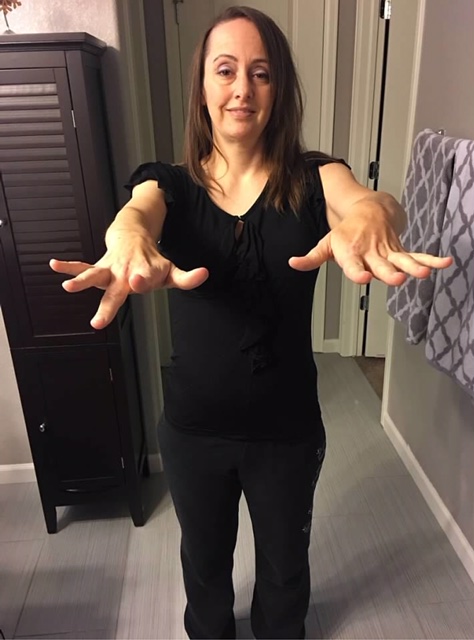
This video shows the physical struggle. I’m showing my hands since it’s harder to see in my feet and legs. Imagine fighting muscle spasms in your feet, ankles and hip to walk. You can see the dystonia in my right leg. However, my left foot is much worse but it’s hard to see.
Please help spread the word that not everyone with a
disability needs to be in a wheelchair or walker. Think twice before judging
someone that doesn’t appear to have a disability. Let’s be kind to each other.
Dr Kumar realized right away that I should see someone about my occipital neuralgia pain. This was life changing for me. They adjusted my gabapentin to 600mg in the morning, 600mg midday and 1,200mg at bed time. They also added 100mg amitriptyline at bed time to help with break through pain. Both medications are nerve pain meds. (I’m listing dosages in case it helps anyone and skipping titration. I will continue as meds are added.)
We then tried nerve pain injections. This worked for a few days but when it wore off, the pain came back with a vengeance. A muscle relaxer, baclofen 20mg, was added to my nightly routine and taken as needed throughout the day. The pain was more tolerable but always there. They routinely take my blood work to ensure my kidneys and liver are functioning at a normal level.
A BIG shout out to Ashley from their office!! Since I was still having trouble sleeping, she prescribed a compound pain cream. AMAZING. Applying this cream takes my pain away. The ingredients go directly to the nerve and aren’t diluted like oral medications. The ingredients aren’t processed through my kidneys or liver. I use this cream along with my daily meds.
The compound cream is not covered by insurance. I’ve had
conversations with the pharmacist that makes my cream. She said some
lawmakers are trying to pass bills that would change laws and drug companies. My
insurance will pay for opioids; we all know the negative side effects. Yet they
won’t pay for something that’s non-addictive and better for your body. It is super
expensive but worth every penny. Unfortunately, my oral medications are
expensive too. Ok, I will step down from my soapbox…for now.
Just when I thought things were on autopilot; my doctor told
me he had taken a position with Kaiser. Of course, I didn’t have a way to get
Kaiser insurance, sad day! I was referred to a neurologist in a sister office
of his practice.
My new doctor was nearing retirement. I wish I knew this before I started seeing him or I would have started looking for a different movement neurologist. I’m not sure if his eyes were that bad or if his ‘I don’t give a poop’ had kicked in. He didn’t start the visit with an exam to see how much Botox I still had at the affected area. He would skip this step altogether. Hmmm, big red flag!
Obviously, injections have a level of discomfort but they had never hurt as much as they did with him. The injections on my eyelids near the bridge of my nose always bug me because my eyeball can feel the needle injecting fluid. I think the needles he was using were too big. My eyes were always bruised after I left his office. The injections in my neck would also leaving me hurting and bleeding. He said he was following the injection pattern of my previous neurologist. Yeah, no! I would have to tell him when he missed a location. There’s only so much makeup I could use on my bruises.
I only went to him 3 or 4 times and needed to figure out how to find a movement neurologist. I had decided to tell him this was my last visit and tell him exactly why. It didn’t work out that way because he informed me, he was retiring and it would be my last appointment. What?!? He broke up with me, d’oh!
I went to my family doctor for help in finding a new
movement neurologist. She did a fabulous job researching neurologists before
submitting a referral for Dr Kumar. I’m surprised he was taking new patients. I
had no idea at the time how he would change my life for the better. I am so
grateful for him and his staff. I can’t imagine I would be doing as well as I
am if I had another doctor.

 Me Myself and My Dystonia